What AI-Powered Search Means for How Customers Find Local Businesses
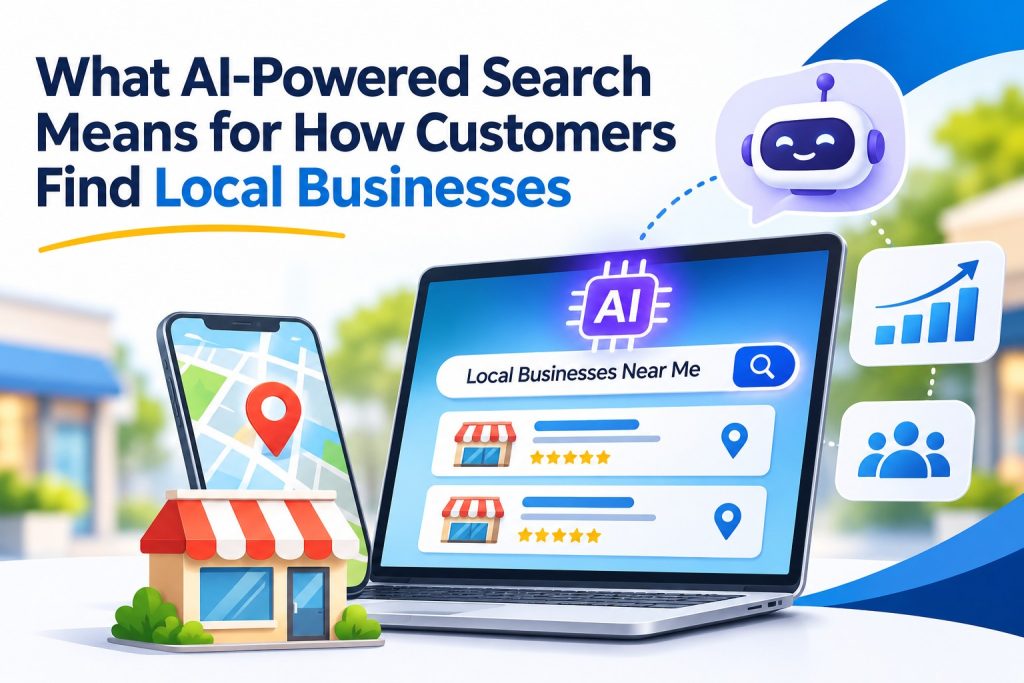
A homeowner with a leaking water heater no longer types “plumber near me” and scrolls. More and more, people speak a full question into their phone: “Who can replace a water heater this weekend in Columbus?” An AI assistant then responds with a short, conversational answer.
For small business owners, this raises a fair question. How does an AI tool learn enough about your business to include it in an answer?
How Conversational Search Changes the Question
Traditional search returned a list of links and let the customer do the comparing. AI-powered search features and assistants try to summarize information instead, often drawing on many public sources at once, such as business websites, map listings, reviews, and online business directories.
The exact sources and methods vary by platform, and most companies do not publish a complete list. What remains consistent is that these systems work best with information that is clear, specific, and the same everywhere it appears.
Make Your Business Easy to Understand
Think about how a customer would describe their problem, then make sure your online information answers it in plain words. A bakery should state that it makes custom birthday cakes, offers gluten-free options, and takes orders 48 hours ahead, not simply “quality baked goods.”
A few practical habits help: write a short, specific description of your services, list your service area and hours, answer common customer questions on your website, and keep your name, address, and phone number identical across your listings. Some businesses also add structured data, such as LocalBusiness schema markup, to their websites so their key details are easier for software to read.
Focus on Accuracy, Not Shortcuts
No listing, plugin, or technique guarantees that an AI assistant will recommend your business. Anyone promising that is overselling. The more reliable approach is to keep accurate, detailed information in the places customers and search tools already look.
Many owners bring in outside help for this work. If you would rather hire a specialist than handle it alone, you can compare agencies in the Advertising and Marketing category on Websolute, where firms describe the services they offer and the areas they cover.
Conclusion
AI-powered search rewards businesses that are easy to describe accurately. Review your website, your profiles, and your directory listings, including your Websolute profile, and ask whether a stranger could tell exactly what you do, where you work, and how to reach you.
Frequently Asked Questions
Do I need a separate strategy for AI search and Google search?
Not entirely. Most of the groundwork overlaps: accurate business information, helpful website content, genuine reviews, and consistent listings. AI search simply puts more weight on clear, plain-language answers, so writing service descriptions and FAQs the way customers actually talk is a sensible addition.
Can I pay to have an AI assistant recommend my business?
Advertising options differ by platform and continue to change, so check each provider directly. Be cautious of third parties claiming they can guarantee placement in AI-generated answers. Organic inclusion generally depends on the information available about your business rather than on a single paid service.
What is schema markup, and do small businesses need it?
Schema markup is code added to a web page that labels details such as your business name, address, hours, and services. It is not required, but it can make that information easier for search tools to interpret. Many website builders and SEO plugins can add basic LocalBusiness markup without custom coding.
How can I tell what AI tools say about my business?
Ask a few popular AI assistants the same questions your customers might ask, such as which companies offer your service in your city. Note any outdated or incorrect details, then correct them at the source, starting with your website, your Google Business Profile, and your directory listings.